
Tracing Former Owners of a Botetourt County Property
The method is simple in shape. Start with the newest recorded deed for the parcel. Work backward through the grantor-grantee chain, one transfer at a time. Virginia COVERS/SRA offers a remote index path, though Botetourt's online cutoff is not published. For deeper ground, the Library of Virginia offers a finding aid. It traces a long trail of books and reels. Local plats and deed exhibits then help. They tie an old land description to the present parcel number.
| Source | Years It Covers | Where Held | What It Shows |
|---|---|---|---|
| COVERS/SRA index | Online start not verified | Virginia court land-record portal | Grantor/grantee index entries; images depend on local access |
| Deed books | 1770-1901, Books 1-58 | Clerk / Library of Virginia microfilm | Recorded conveyances and legal descriptions |
| Grantor/grantee reels | 1770-1972, by series | Library of Virginia finding aid | Party indexes for stepping back by name |
| Plats and land books | Series and image cutoffs not verified | Clerk, county GIS, archives | Lot divisions and older land references |
Pull the latest deed for the current parcel first. Its grantor becomes the grantee you hunt in the next earlier deed. When the index runs out, move to the listed reel or deed book. Guessing at an owner skips evidence. A tax roll or archive clue can point toward a name. But only a deed is a conveyance.
Following the Botetourt County Deed Chain Backward
Open with the parcel's most recent instrument. Record both parties, the recording date, the book and page or instrument number, any consideration stated, and the exact legal description. The grantee on one deed becomes the owner name you test in the next earlier index search. Search both roles, grantor and grantee. An estate, a trustee, or a corrective transfer may not look like a simple sale, so the roles tell you what kind of conveyance you have found.
- Find the present grantee's acquisition deed in COVERS/SRA or from the Clerk.
- Write down the grantor, land description, recording reference, and date.
- Search that grantor as an earlier grantee, testing spelling variants and initials.
- Repeat through the older index; change to the applicable book or reel when remote coverage ends.
- Grantor / grantee
- The party who conveys and the party who receives an interest.
- Chain of title
- The connected sequence of recorded transfers for the land.
- Legal description
- The deed or plat wording that identifies land when a current address is absent.
Depth of Botetourt County Ownership Records
The Library of Virginia lists Botetourt Deed Book 1 covering 1770 to 1773. Books 1 through 35 run through 1869. Books 36 through 58 run through 1901. General deed indexes cover 1770 to 1889. Later grantor and grantee index reels group together through 1971, with 1972 volumes listed separately. The SRA online start year is not published. For older records, that archival sequence is the dependable guide.
Lawful use. Use prior-owner records for house history, title research, and property diligence. Do not use a historical name or address to track, threaten, or harass a living person.
Botetourt's Deed Books and Index Reels
The Library of Virginia finding aid is the practical map for Botetourt County's older chain. It separates the early general deed indexes from the later alphabetized grantor and grantee reels. Pick the correct role and alphabet group. Then follow the reference into the bound deed book itself. The full instrument, never the index line alone, is what matters. It gives the complete land description and both parties.
The record sequence reflects real history. Botetourt County formed from Augusta County in 1770 and gained part of Rockbridge in 1785. Very old deeds may describe land by acreage, waterways, ridges, farms, roads, and neighbors. They may not use a street name at all. Keep the present parcel key and the historic description side by side. Do this as the chain crosses eras.
The Library of Virginia's Botetourt microfilm guide identifies the book and index series. 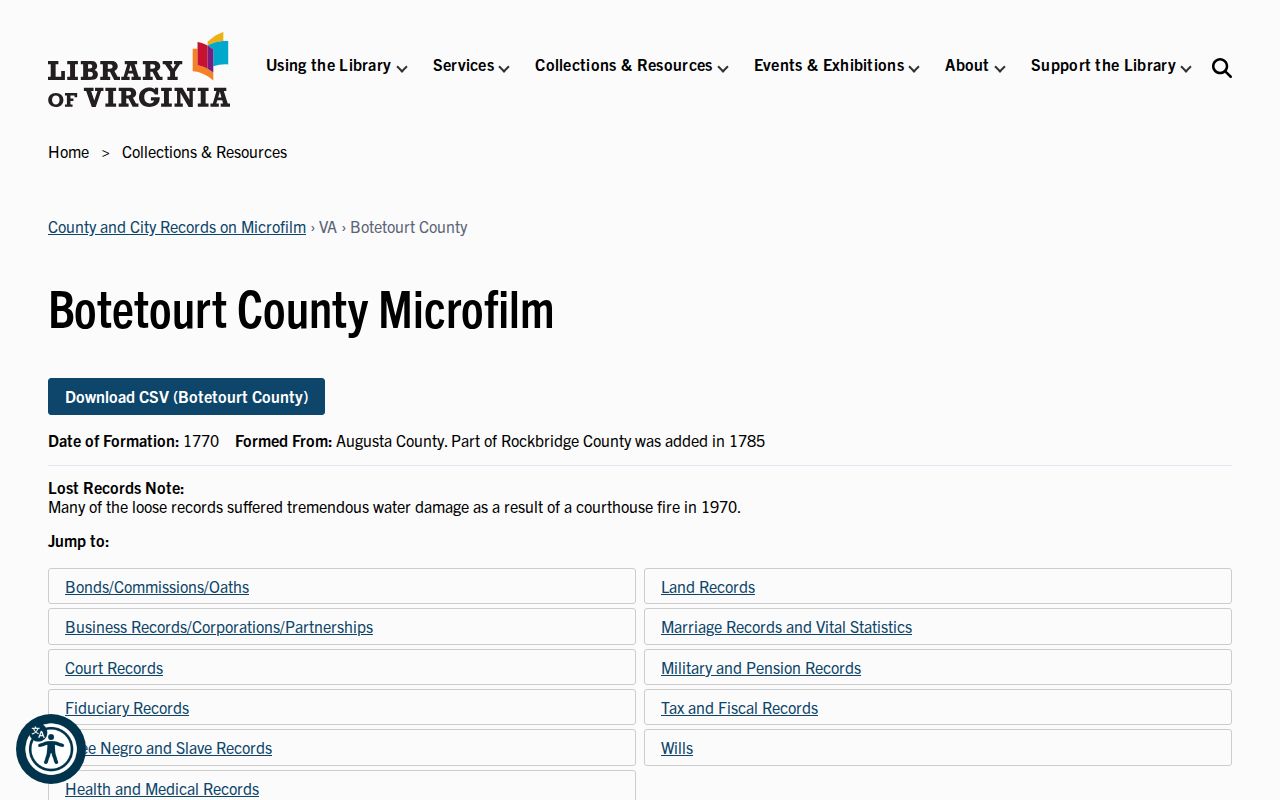 Check the described volume before ordering a film or planning a visit.
Use the grantee index to find the instrument by which an owner received the land. Then search that same name in the grantor index to catch a later conveyance out. Move backward one transfer at a time. Check dates and descriptions rather than jumping to a family surname. If a reference crosses from a reel to a bound book, note the volume and page. Do this before switching series. The index builds a path. The instrument proves whether the tract matches.
Index entries may group names by letter. They may also use spellings that differ from later family sources. Try reasonable surname variants and initials. But verify every candidate against the legal description and the other party named in the instrument. The finding aid's dates divide the work into eras. They do not promise that every page is legible or that every original paper survived. If one series ends without a clear link, ask the Clerk about the next book or reel. Document the gap rather than filling it with a guess.
The 1970 Fire and Earlier Owners
A 1970 courthouse fire caused tremendous water damage to many loose Botetourt County records. A gap in a loose-paper series does not mean a transfer never happened. Bound books, indexes, and Library of Virginia microfilm often preserve the path. An expected paper may be missing from a remote result. Ask the Clerk whether a volume or film copy exists.
Compare more than one record wherever you can. A grantee index, deed book, plat, land book, and estate file all help here. Each may add a different link. Note where each source came from. Note whether it is an index, a copy, or an original volume. That habit keeps an archival clue separate from a legal conclusion.
Virginia Vital Records provides genealogy guidance for older vital records, including access rules for closed records. The state genealogy page explains its records access. 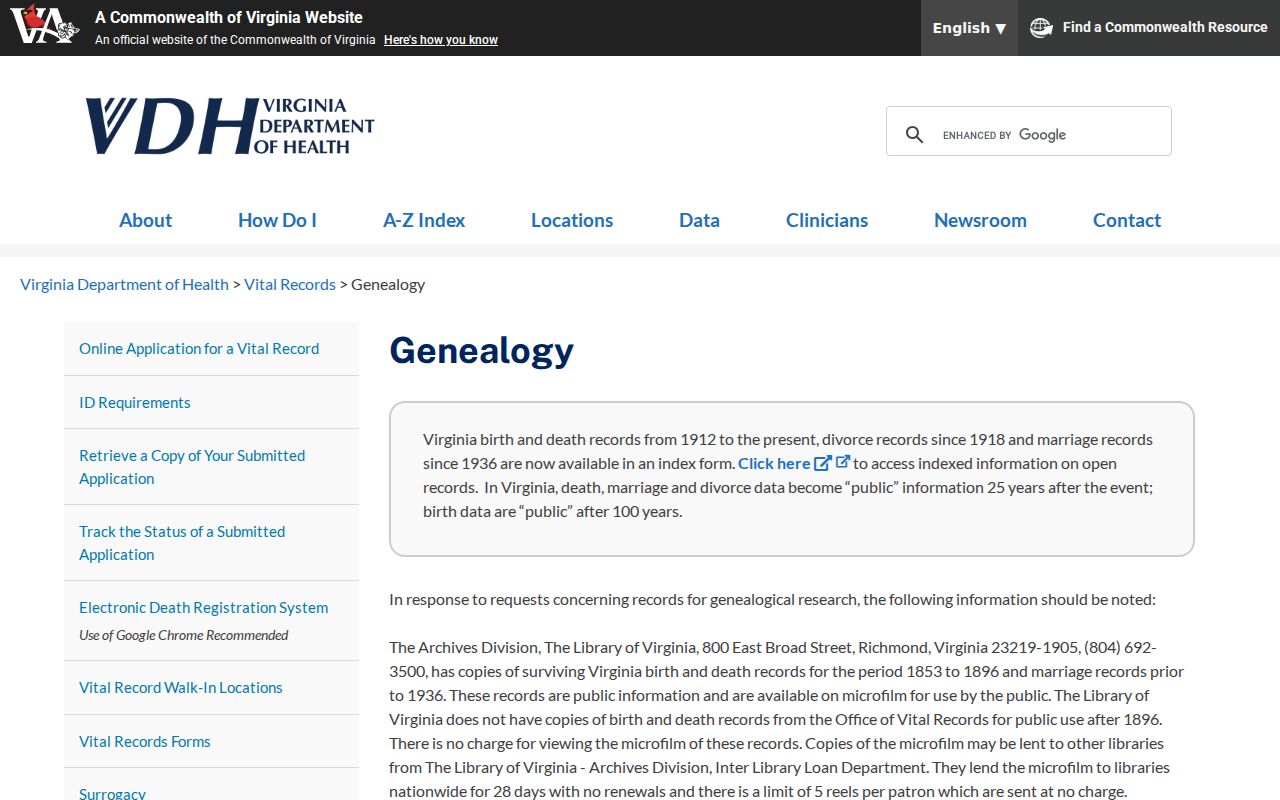 A death or family record can explain a name change, but the recorded deed remains the ownership evidence.
Estate Paths in a Botetourt Chain
Prior owners in Botetourt County sometimes entered the chain as an executor, administrator, trustee, devisee, or heir. They did not always come in as buyers. Search the decedent's name in both the grantor and grantee columns of the deed index. The Circuit Court Clerk's office also keeps wills and fiduciary files worth checking. A will shows who was meant to receive land. The recorded instrument is different. It is what actually updates the owner of record on the property roll.
The Library of Virginia holds guardians' accounts from 1799 to 1839. It also holds fiduciary records from 1870 to 1882 and again from 1922 to 1946. Its collections add audits, appraisements, and accounts of sale running from 1881 into the early 1900s. These estate files often explain a break in a Botetourt County deed chain. They can also explain a name change. Death, marriage, and divorce records in Virginia become public after 25 years. Closed records stay limited to eligible requesters.
Old Addresses and Botetourt House History
A historic Botetourt County owner may appear under a farm name, an old road, a post office, or an adjoining tract. The address you know today may not match at all. Local libraries fill in the gaps. The Fincastle Library's Genealogy Room holds family histories and Virginia county books. It also keeps cemetery records and local history volumes. Eagle Rock Library keeps pamphlets, yearbooks, and its own genealogy holdings. Botetourt Memory adds historic photographs, newspaper material, postcards, and records tied to geography and architecture.
The library request form asks for a full name, a geographic area, and a year. It includes a land-records/deeds option with access to a deeds index. A photograph or directory can supply a spelling clue. Then confirm the transfer itself in the Circuit Court record before trusting it.
Botetourt County lists its local-history rooms and genealogy request form. 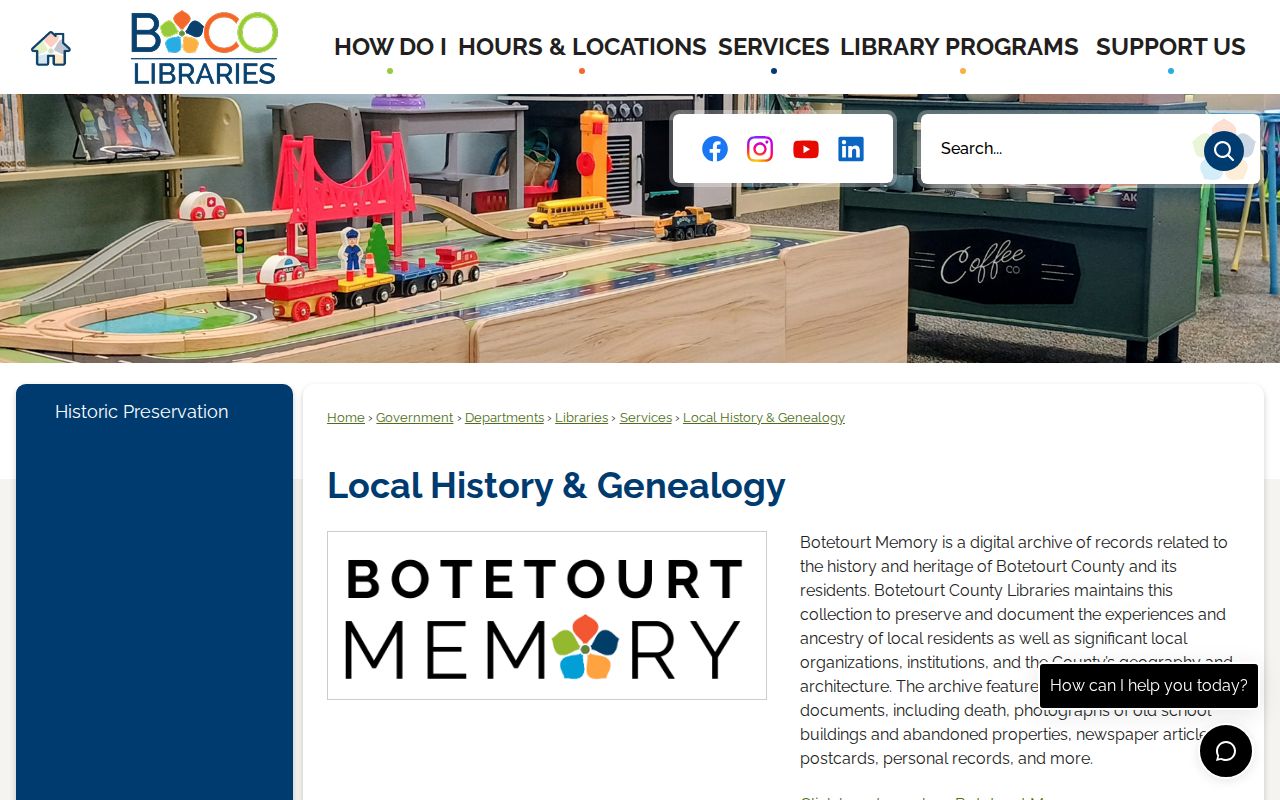 Ask the library about current coverage before relying on a collection.
When Older Images Are Unavailable
COVERS/SRA may offer a free index while the images themselves require the local Clerk's approval, an agreement, and a paid subscription. Botetourt County's image cutoff and fee are not published. Save the index reference either way. Then contact the Circuit Court Clerk at 540-473-8274, or write to P.O. Box 219, Fincastle, VA 24090. Ask about counter access, a mailed copy, or the bound book or reel you need.
For historic collection material, turn to the Library of Virginia finding aid and the local library rooms. A county FOIA request covers existing administrative records only. It cannot replace a court copy request. The Botetourt County deed records page explains how to get a single deed copy through the Clerk's channels.
Virginia's SRA page explains index-only and image access. 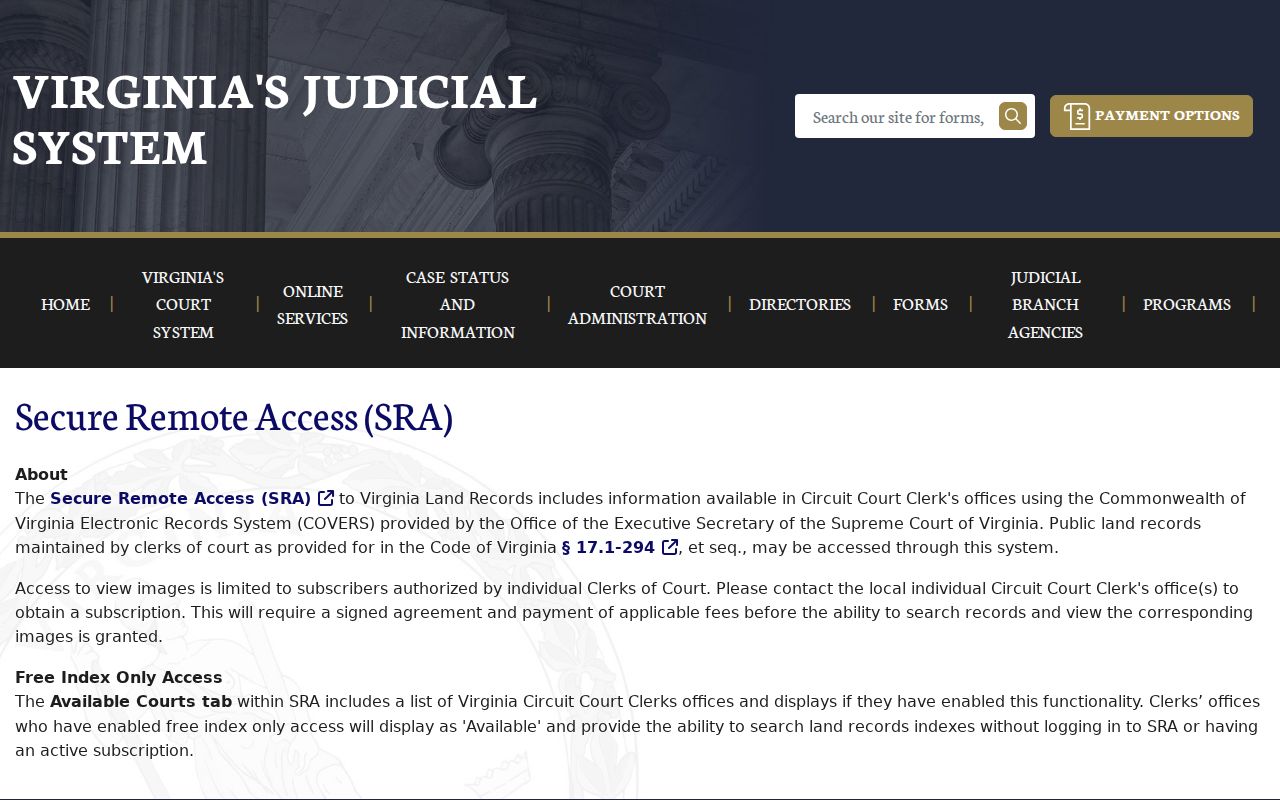 Confirm the local access terms before submitting a payment.